Free Self Assessment
Virtual EMDR
Support for Anxiety
See How Virtual EMDR Can Support Your Recovery

How Virtual EMDR Can
Support Anxiety?
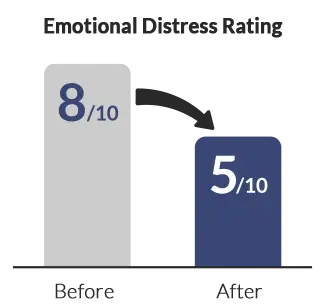
Data from 10,000 Virtual EMDR Sessions
Anxiety can leave you feeling on edge and expecting something to go wrong. For some people, it may be connected to difficult experiences, emotional triggers, or negative beliefs.
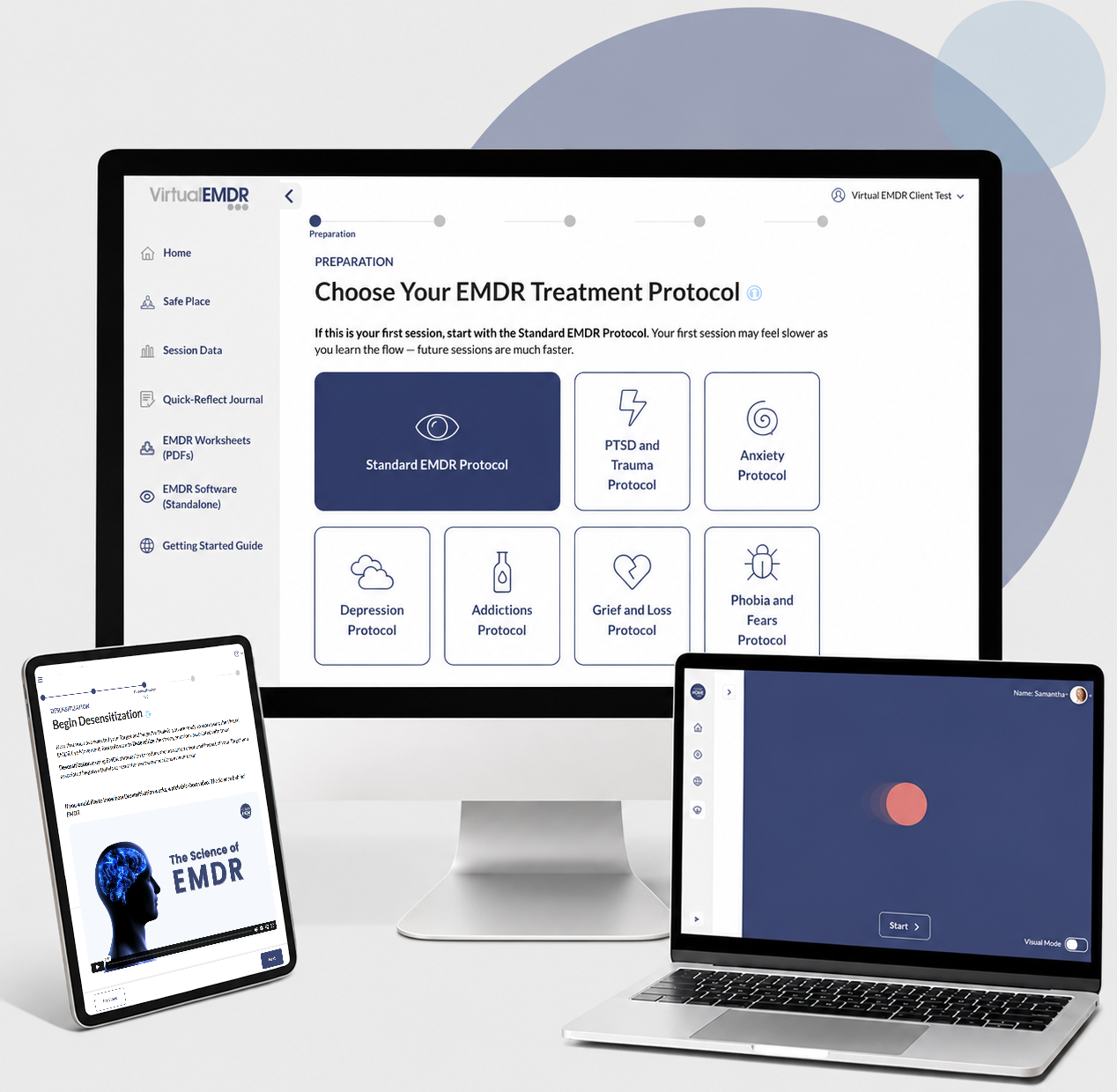
Virtual EMDR gives you a structured, self-guided way to work on those experiences and the distress connected to them. This may help anxious thoughts, triggers, and difficult situations feel more manageable over time.
Virtual EMDR can be one part of a broader approach to managing anxiety, alongside other support when needed.
Take Control
of Anxiety




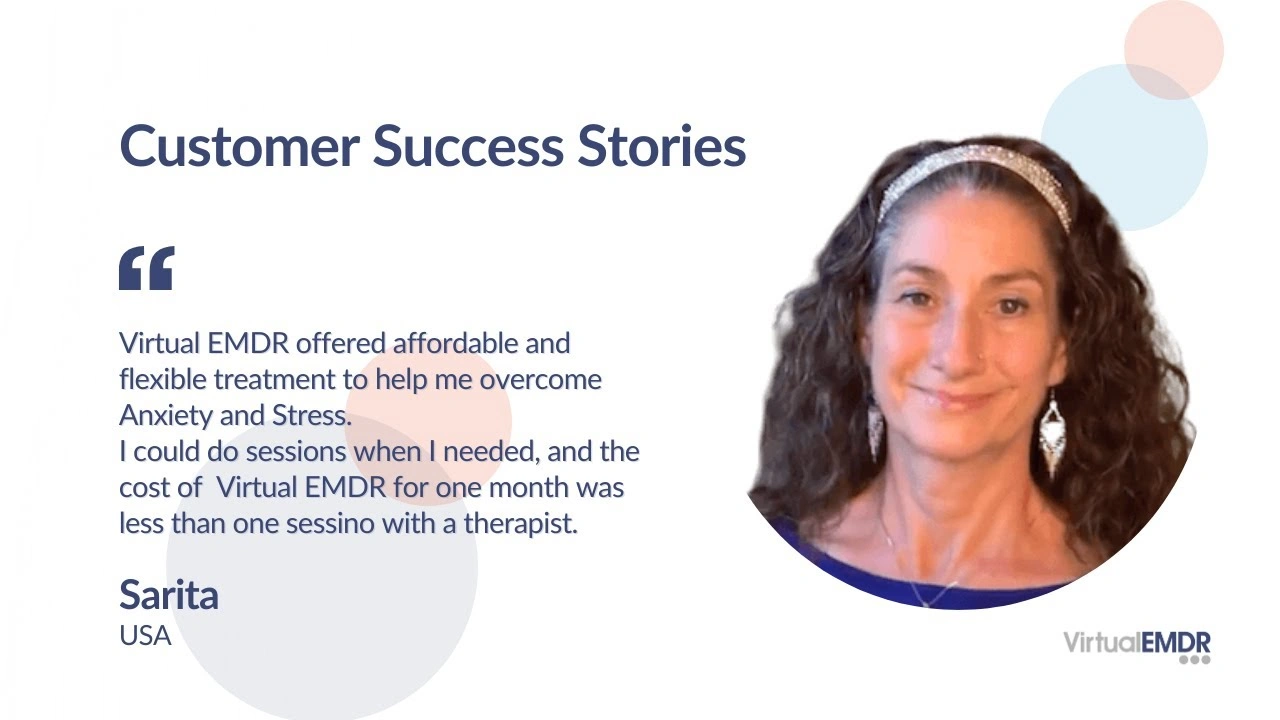
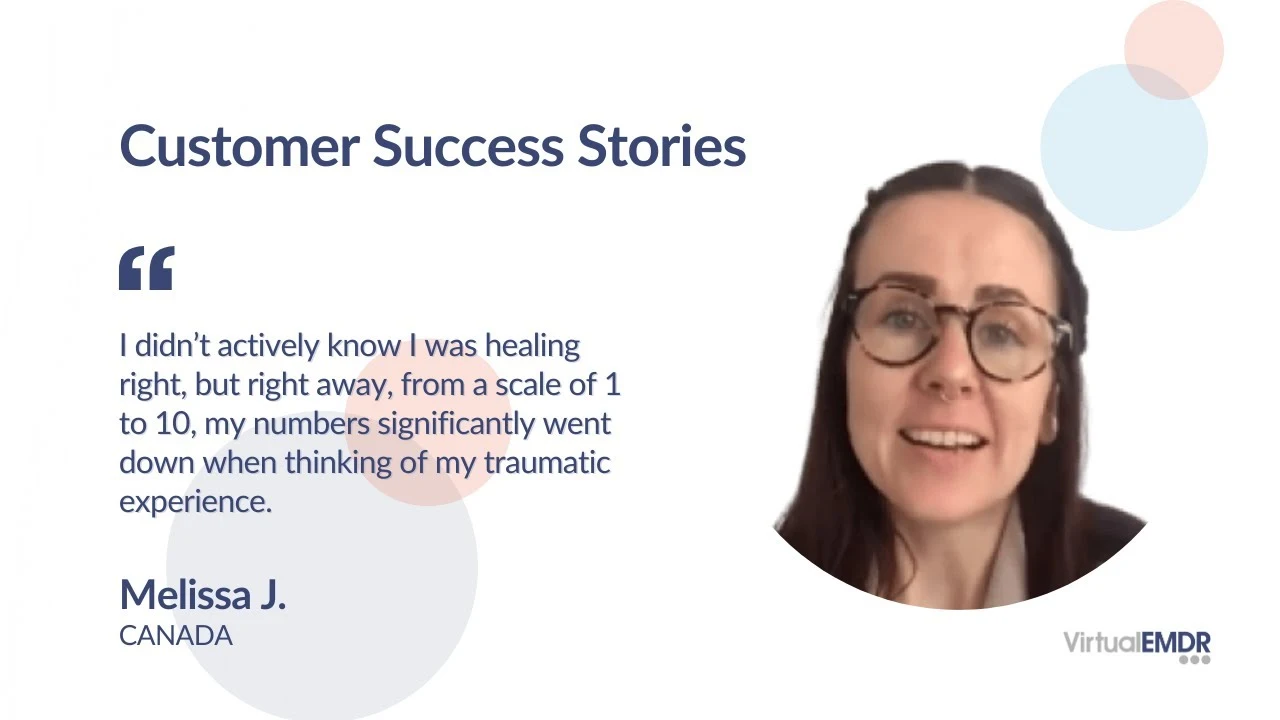
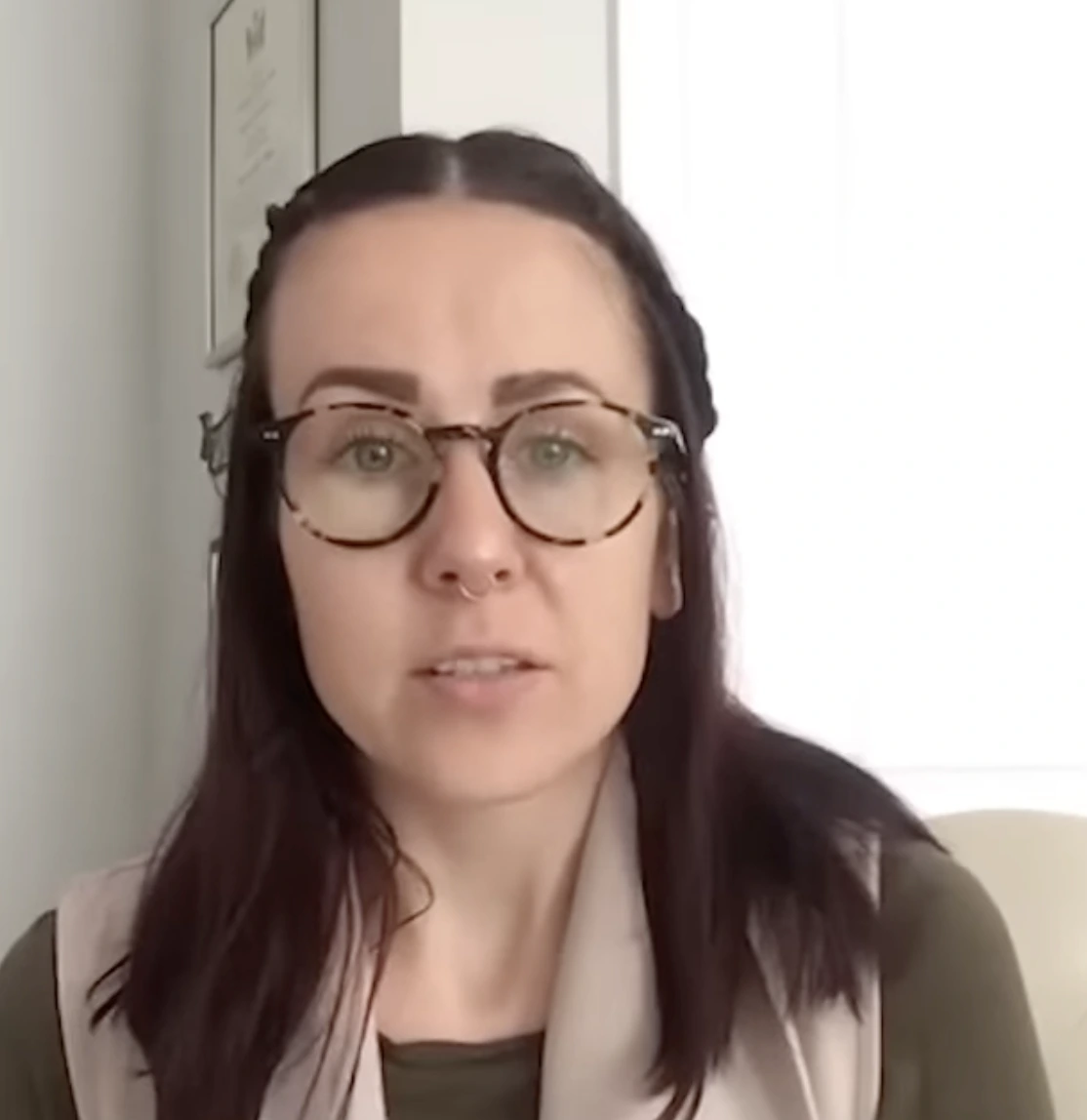
I had a series of life challenges, and was struggling with Anxiety. With Virtual EMDR, I felt results instantly. It was AMAZING! I could heal and work on things that triggered me. I’m in a really good place now. Thank you!
Sarita C.
USA

Roberto E.
USA
Melissa J.
USA
Select the Anxiety Protocol You Need
Virtual EMDR offers specialized Anxiety Protocols to help you work on:
Experiences and memories connected to anxiety
Situations that trigger anxious thoughts and feelings
Negative beliefs that contribute to anxiety
Fear and distress about future situations
More Than Anxiety: Your subscription also includes unlimited access to EMDR protocols for
Trauma & PTSD, Grief & Loss, Phobias & Fears, Addiction, and more.
# 1 ONLINE SELF-GUIDED EMDR PROGRAM
Let Virtual EMDR Help
You Overcome Anxiety
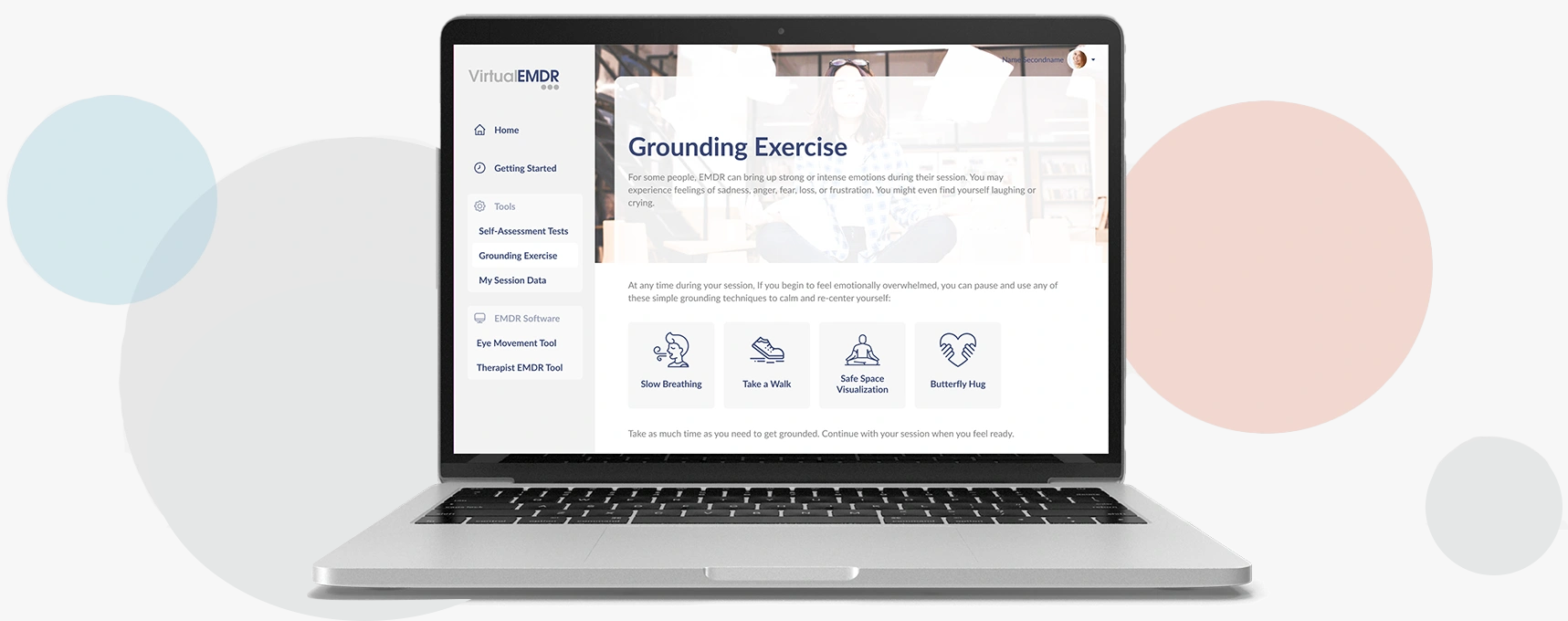
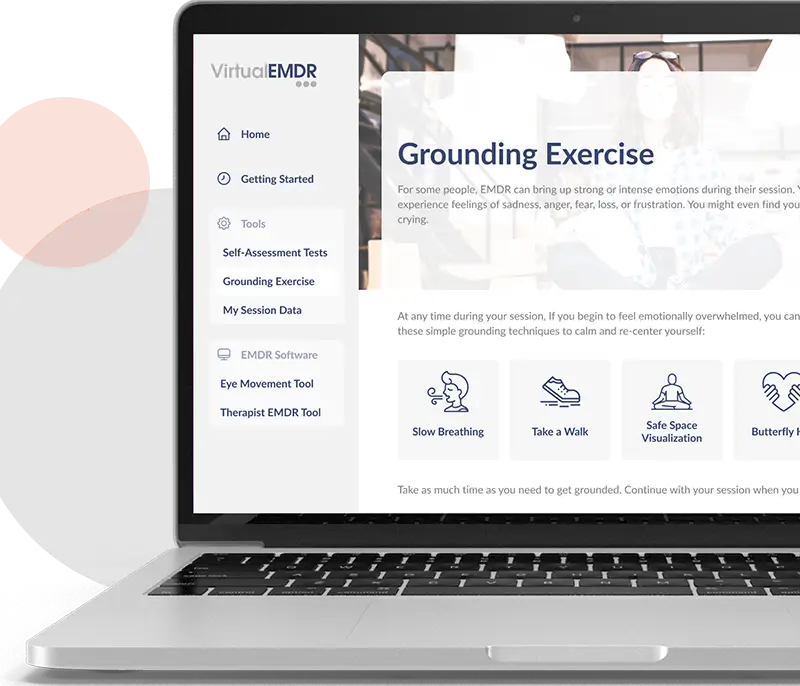
Simple, easy-to-use. Even if you have never done EMDR before.
Check out why Virtual EMDR is uniquely designed for you:
Frequently Asked Questions
Can EMDR be used for anxiety?
Yes. EMDR is commonly used to work on anxiety, including distressing experiences, triggers, anxious thoughts, and negative beliefs. Virtual EMDR allows you to work on these areas in a structured, self-guided format.
Can EMDR be used for anxiety triggers?
Yes. EMDR can focus on memories, situations, or thoughts that bring up strong anxiety. You can work on the emotions and reactions connected to those triggers.
Do I need to know exactly what caused my anxiety?
No. You do not need to identify one specific cause before using EMDR. You can work on the memories, situations, thoughts, or feelings that are creating distress for you now.
Can I use Virtual EMDR alongside therapy or anxiety medication?
Yes. Virtual EMDR can be used alongside therapy, prescribed medication, or other approaches you already use to manage anxiety.
Take the Next Step With Anxiety
Work on the memories, triggers, and thoughts that may be contributing to your anxiety.

Ready to take the
Generalized Anxiety Test?
The Generalized Anxiety Disorder (GAD-7) Test
is recommended by the Anxiety and Depression Association of America (ADAA) to diagnose Generalized Anxiety.
It is also used to diagnose 3 other conditions: Panic disorder, Social Anxiety disorder, and Post-Traumatic Stress Disorder.

It comprises 7 questions with 4 choices each.
Estimated Time to complete: 5 minutes